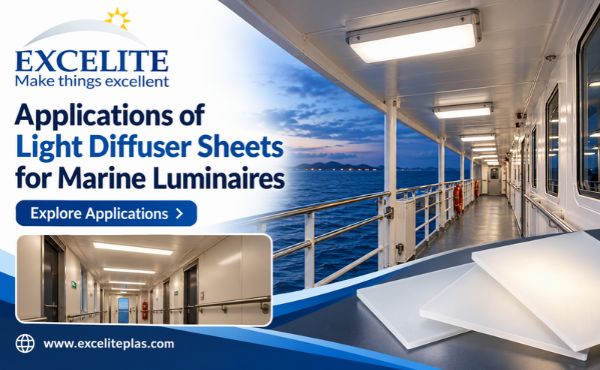
Light diffuser sheets for marine luminaires spread LED light, soften visible bright points, and help create a more uniform illuminated surface. Polycarbonate and acrylic are both useful options, but the appropriate material depends on where the luminaire operates and what the diffuser must withstand.
An interior cabin light has different requirements from a fitting on an exposed deck. Impact, sunlight, temperature, cleaning chemicals, and the construction of the complete luminaire all influence selection. The optical material must work with the housing, seals, light source, and approval requirements.
The Role of a Diffuser in a Marine Luminaire
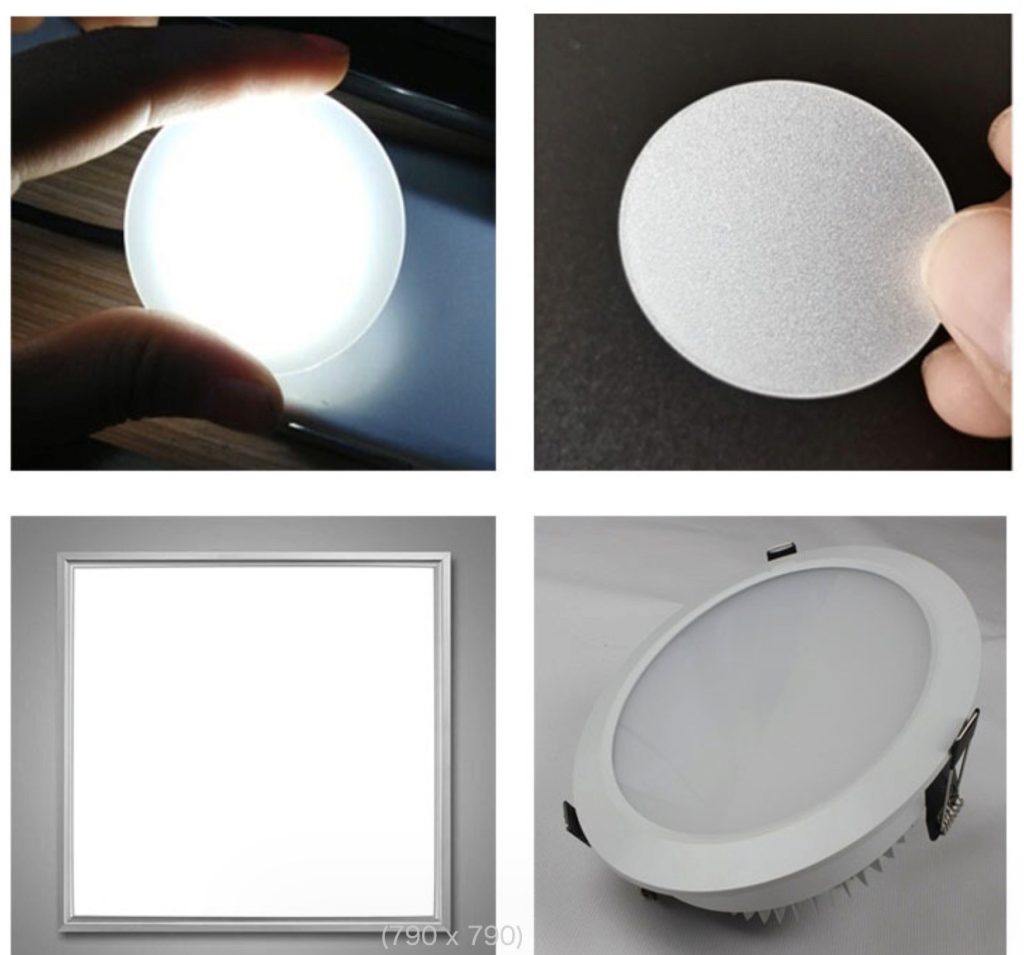
A diffuser changes how light passes through a surface. Instead of allowing individual LEDs to appear as separate bright points, it scatters light to produce a more even appearance.
This can improve visual comfort, although a diffuser alone does not guarantee low glare. Luminaire brightness, viewing angle, positioning, and optical design remain important.
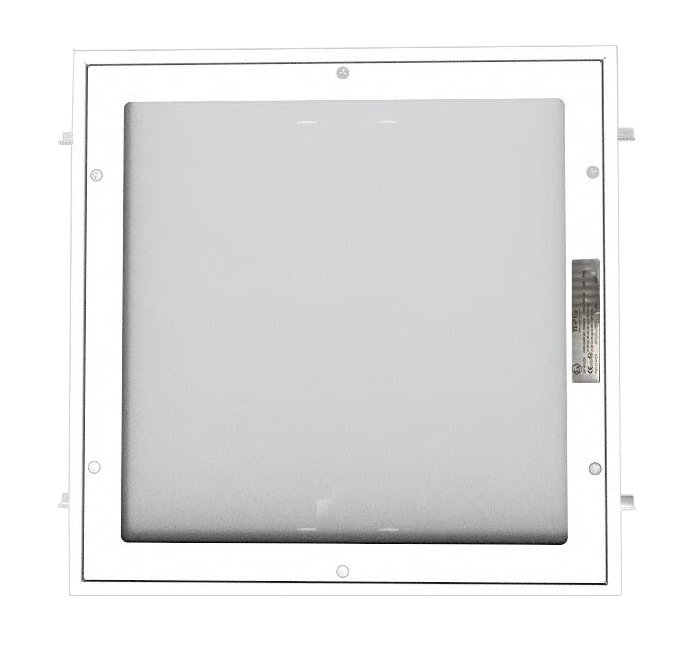
Some fittings use an internal diffuser protected by an external cover. Others use one component as both the optical diffuser and the outer protective enclosure.
That distinction changes the material requirements. An internal sheet may have little exposure to impact or weather. An external cover must also tolerate handling, environmental exposure, and the mechanical demands of sealing.
Flat sheets are suitable for certain panel designs. Curved or profiled covers may require forming, extrusion, or moulding rather than simply cutting a flat sheet to size.
Common Applications on Ships and Offshore Facilities
Accommodation Areas and Passenger Spaces
Cabins, corridors, lounges, and other interior spaces often prioritise comfortable lighting and a consistent appearance.
An opal or frosted diffuser can conceal LED points and create a smooth illuminated surface. Material selection should consider colour consistency, cleaning practices, surface finish, and the temperature reached inside the fitting.
The lighting arrangement also matters. A diffuser placed too close to widely spaced LEDs may still show bright spots, regardless of whether the material is acrylic or polycarbonate.
For passenger-facing spaces, inspect samples under the intended light source. A sheet that looks white when unlit may have a different appearance when illuminated.
Machinery Spaces and Service Areas
Lighting in machinery spaces, workshops, and service corridors may face vibration, accidental contact, contamination, and more demanding cleaning.
Polycarbonate is often considered where impact resistance is important. However, suitability still depends on the grade and actual exposure.
Cleaning agents, lubricants, and other substances should be identified before material selection. A diffuser can develop cracks when chemical exposure combines with stress from clips, forming, or fastening.
The design should also permit maintenance without damaging the cover. Repeated opening and closing can place loads on edges, fixing points, and sealing surfaces.
Exposed Decks and Exterior Walkways
Exterior marine lighting may experience sunlight, spray, salt deposits, rain, and temperature changes.
A suitable diffuser must maintain useful optical and mechanical performance under those conditions. For polycarbonate, this commonly involves specifying a UV-protected grade. Acrylic has strong weathering performance, but its lower impact toughness can influence suitability in exposed locations.
Marine lighting manufacturers offer polycarbonate components alongside application-specific marine approvals, demonstrating the importance of selecting both the material and the complete fitting for the operating environment.
Emergency and Escape-Route Lighting
Emergency lighting depends on the performance of the assembled luminaire. The diffuser influences how much light reaches the required area and how it is distributed.
Replacing an approved component with a visually similar sheet may change that performance. Transmission, diffusion, thickness, colour, and fit should match the approved specification or be accepted through the appropriate review process.
Polycarbonate vs. Acrylic Diffuser Sheets
Neither material is the best choice for every marine luminaire.
| Selection factor | Polycarbonate diffuser | Acrylic diffuser |
|---|---|---|
| Accidental impact | Often preferred for toughness | Usually requires greater protection from impact |
| Optical design | Available in specialised diffusing grades | Available in specialised diffusing grades |
| Outdoor exposure | Specify suitable UV protection | Strong weatherability in appropriate grades |
| Heat exposure | Often offers greater thermal capability | Verify suitability at actual operating temperature |
| Surface scratching | Standard surfaces need careful handling | Generally harder than standard uncoated PC |
| Fire performance | Flame-retardant grades available | Verify the exact grade and required performance |
| Fabrication | Grade and process influence forming options | Cast and extruded products behave differently |
These are general selection tendencies. Final decisions should use data for the exact product, thickness, and surface treatment.
Specialised acrylic lighting materials are designed to balance diffusion and transmission, illustrating why ordinary clear-sheet properties do not describe every diffuser grade.
Selecting Light Transmission and Diffusion
Transmission and LED Concealment
Light transmission describes how much light passes through a material. Diffusion describes how that light is scattered.
A highly transmitting sheet may allow LED points to remain visible. A stronger diffuser may hide them more effectively while reducing the light leaving the fitting.
The correct balance depends on the lighting requirement. A decorative panel and a service-area luminaire may need different optical performance.
Avoid choosing a diffuser from transmission alone. Request information about thickness, test method, haze, and the intended optical use.
LED Spacing and Optical Distance
The distance between LEDs and the diffuser strongly affects uniformity. More distance gives light additional space to spread before reaching the sheet.
If the luminaire is very shallow, a different diffuser grade, closer LED spacing, or additional optical design may be necessary.
This makes sample testing particularly valuable. Evaluate the sheet using the intended LED board, operating current, reflector, and mounting distance.
Check the appearance both directly in front of the fitting and from normal viewing angles.
Surface Finish and Light Distribution
Opal, frosted, patterned, and microstructured surfaces can produce different visual and optical effects.
Some finishes primarily conceal the light source. Others influence distribution or reduce the visibility of surface marks.
Specify which side faces the light source and whether the finish affects cleaning. An exposed textured surface may collect contamination differently from a smooth cover.
Environmental and Mechanical Requirements
Sunlight and Long-Term Appearance
For exterior service, ask for weathering evidence relevant to the selected grade.
A general statement such as “UV resistant” gives limited information unless the supplier explains the test conditions, protected surfaces, and expected property retention.
Acrylic’s weathering resistance is a recognised reason for its use in outdoor optical applications, while polycarbonate frequently relies on suitable stabilisation or protective layers.
Salt, Cleaning, and Chemical Exposure
Salt deposits can reduce light output and damage the appearance of a cover if cleaning scratches the surface.
Chemical compatibility should cover the complete cleaning process, including concentration, temperature, contact time, and rinsing.
Compatibility also changes under mechanical stress. Formed corners, tightly clamped edges, and fixing holes may be more vulnerable than an unstressed sample.
Evaluate the finished or representative component rather than relying only on a general chemical chart.
Temperature and Expansion
Use the temperature reached by the diffuser during operation, rather than the ambient air temperature alone.
Heat from LEDs, drivers, restricted airflow, and solar exposure can affect the component. Repeated heating and cooling also create movement.
The mounting arrangement should allow expansion without excessive bowing, loss of retention, or pressure against the gasket.
Material Evidence and Finished-Luminaire Approval
An IP rating describes the tested enclosure’s protection against specified ingress conditions. It is not a property of a loose diffuser sheet.
Likewise, an impact rating relates to the tested product configuration. Material toughness alone does not establish that rating.
A useful selection package should include:
- The exact material grade and thickness.
- Relevant optical and temperature data.
- UV and chemical compatibility information.
- Applicable flammability evidence.
- Forming and installation requirements.
- Confirmation of compatibility with the luminaire’s approval.
Marine classification, electrical safety, and hazardous-area requirements depend on the vessel, location, and project specification.
Where explosive atmospheres are possible, material substitution requires particular care because the component may affect several aspects of the approved equipment construction.
Frequently Asked Questions
Can a clear cover replace an opal diffuser?
Only after checking the optical and approval implications. A clear cover may expose individual LEDs, change light distribution, and increase apparent brightness. Physical fit alone does not establish equivalence.
Why are LED points still visible through a diffuser?
The diffuser may provide insufficient scattering for the LED spacing and optical distance. A shallower fitting often needs closer LED spacing or a different optical solution. Increasing opacity may help, but it can also reduce output.
Can a replacement diffuser change light colour?
Yes. Its colour, thickness, ageing condition, and optical formulation can influence the transmitted light. Compare replacements under the actual LEDs, especially where several adjacent fittings need a consistent appearance.
How should salt deposits be removed?
Follow the luminaire and material manufacturer’s instructions. Typically, deposits should be softened and removed using approved nonabrasive methods. Avoid dry wiping and unapproved solvents, which can scratch the surface or damage stressed plastic.
Conclusion
The best marine lighting diffuser combines suitable optical performance with the mechanical and environmental durability required by its location. Polycarbonate and acrylic both have useful roles.
Select the exact grade, test it within the luminaire, and verify that the completed construction meets the project’s requirements. This is especially important when replacing an existing approved component.