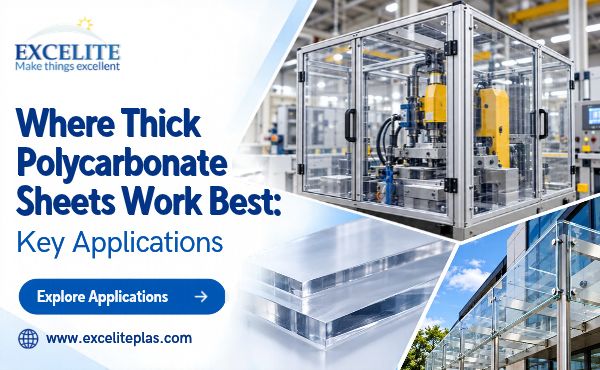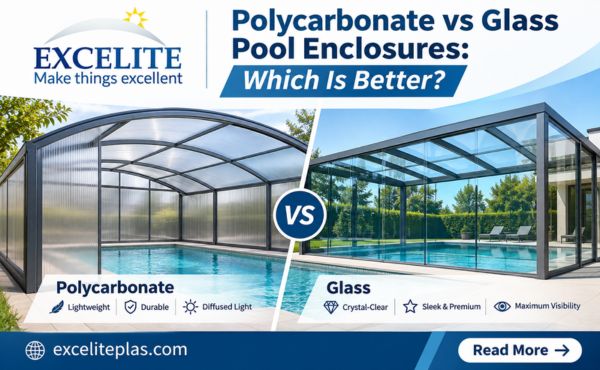
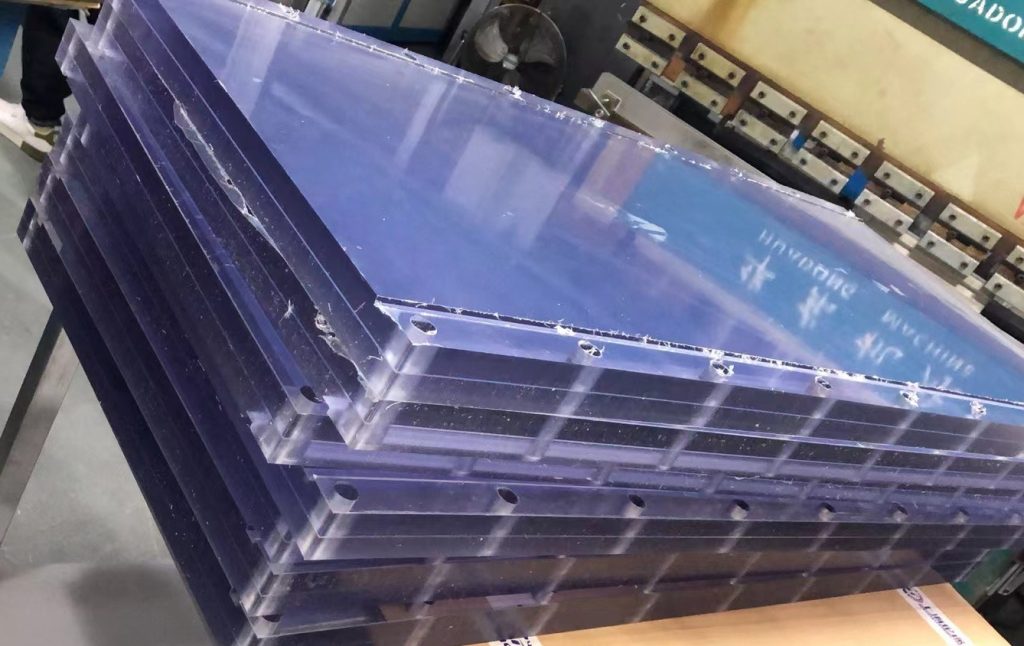
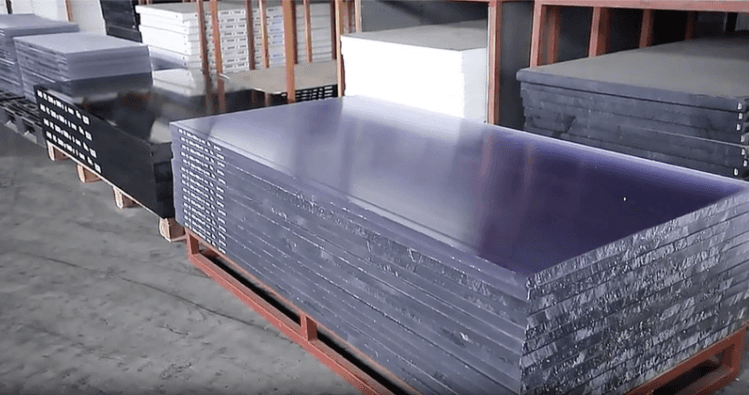
Thick polycarbonate sheets work best in transparent guards, protective glazing, industrial covers, and machined components that need to withstand impact while limiting bending. They are particularly useful when people need to see a process or area through a panel that may experience accidental contact, flying debris, or repeated handling.
However, thickness is only one part of the specification. A large panel with weak support can still bend excessively, while a thick sheet with an unsuitable surface can scratch or deteriorate during cleaning. Successful selection combines the right thickness with a suitable grade, mounting arrangement, and maintenance plan.
What Thickness Changes in a Polycarbonate Sheet
This article focuses on solid polycarbonate sheets, rather than hollow or multiwall panels. “Thick” has no universal definition across suppliers and applications. A thickness considered substantial for a small equipment cover may be inadequate for a large unsupported barrier.
Increasing thickness makes a solid sheet more resistant to bending. This can help a guard maintain its shape, keep a viewing panel within its frame, or provide enough material for machining recesses and fastening features.
It also increases weight, material cost, and fabrication effort. Thicker material may require different cutting tools, forming conditions, and handling equipment.
Importantly, thickness does not automatically provide abrasion resistance, outdoor durability, or a defined security rating. Manufacturers offer separate grades and coatings for requirements such as UV protection, scratch resistance, and flame performance. These features must be specified explicitly.
Key Applications for Thick Polycarbonate Sheets
Machine Guards and Equipment Viewing Windows
Polycarbonate machine guards allow operators to observe moving equipment while maintaining a physical separation from the process. Thicker sheets can be useful for larger viewing areas or where the guard must resist foreseeable impact and remain securely retained.
Examples include transparent panels around machining operations, production equipment, and automated handling systems.
The specification should begin with the actual hazard. A guard intended to prevent accidental hand contact has different requirements from one intended to contain a broken tool or an ejected workpiece.
Panel size, impact energy, fastener layout, frame strength, and chemical exposure all influence suitability. Cutting fluids and cleaning products also deserve attention because some substances can damage stressed polycarbonate.
A sheet supplier’s thickness recommendation is a starting point. The completed guard must meet the machine’s risk assessment and applicable guarding requirements.
Protective Glazing and Security Barriers
Thick solid polycarbonate sheets are used where visibility and resistance to breakage are both important. Potential applications include protective partitions, impact-prone observation windows, and glazing in areas exposed to accidental damage or vandalism.
Their value comes from combining transparency with toughness. People can maintain a clear line of sight without using a brittle glazing material.
However, ordinary thick polycarbonate should not be described as bulletproof or automatically suitable for forced-entry protection. Defined security performance requires testing of the specified construction, often including multiple layers, a particular frame, and controlled installation details.
For general protective glazing, the designer should still consider panel retention after impact. A strong sheet provides limited benefit if it can pull out of its frame.
Industrial Enclosures and Inspection Covers
Industrial equipment often needs transparent covers that protect components while allowing routine observation. Examples include inspection lids, instrument covers, test equipment enclosures, and access panels.
Thicker polycarbonate can support a more rigid cover, especially where the part includes hinges, handles, machined openings, or repeated removal.
These applications also show why the environment matters as much as impact resistance. A cover near a heat source may experience distortion or long-term loading. An inspection window exposed to oil mist may need careful chemical compatibility checks. A frequently cleaned enclosure may benefit from an abrasion-resistant surface.
The best material is the grade that maintains its function throughout the expected operating and cleaning conditions.
Transport and Heavy Equipment Glazing
Transparent panels on industrial vehicles and heavy equipment can face vibration, debris, weather, and repeated cleaning. Polycarbonate is a possible option where toughness is a priority.
Thickness may help control panel movement, but the complete glazing design must also address mounting loads, edge support, visibility, and surface wear.
Outdoor use normally requires an appropriate weather-resistant grade. Where wipers, dust, or frequent wiping contact the surface, abrasion resistance becomes particularly important.
Vehicle and transport glazing may also be subject to specific approval requirements. An industrial sheet that performs well as a stationary cover cannot automatically replace approved vehicle glazing.
Machined Transparent Components
Thick polycarbonate stock can be routed or milled into custom components such as recessed inspection covers, transparent housings, and protective parts with integrated mounting features.
The additional thickness gives designers room to create steps, pockets, and sealing surfaces.
Machining quality affects the result. Heat buildup, unsuitable tooling, and aggressive clamping can introduce stress or cause local damage. Sharp internal corners and poorly positioned holes may create vulnerable areas.
Optical expectations should also be discussed before production. A machined component can remain useful for inspection without providing the same visual quality as a polished sheet viewed through untouched surfaces.
Matching the Sheet to the Application
A practical specification connects the reason for using thick material with the additional feature needed for service.
| Application | Main reason for considering thick sheet | Additional requirement to verify |
|---|---|---|
| Machine guard | Impact resistance and controlled deflection | Hazard assessment, retention, coolant compatibility |
| Protective glazing | Toughness and larger clear openings | Frame strength and any required security testing |
| Inspection cover | Rigidity and repeated handling | Temperature, hinges, seals, cleaning |
| Outdoor equipment window | Resistance to accidental impact | UV protection and surface abrasion |
| Machined component | Material for pockets and mounting details | Tolerances, residual stress, optical finish |
Avoid ordering only by material name and thickness. Two sheets with the same dimensions may differ in coating, outdoor suitability, optical quality, and fire performance.
The purchasing specification should identify the exact grade or the performance requirements that an equivalent product must satisfy.
Choosing Thickness and Support Together
Panel Size and Allowable Bending
The unsupported span strongly affects how much a sheet bends. A large opening may require thicker material, closer supports, or a different framing arrangement.
The acceptable amount of movement depends on the application. A display cover may tolerate visible flexing, while a machine guard must maintain the necessary clearance from moving parts.
Designers should therefore consider thickness and frame geometry together. Increasing thickness is not always the most efficient way to improve performance.
For panels exposed to sustained loads, long-term behaviour also matters. Plastics can gradually deform under load, particularly at elevated temperatures. Short-term stiffness data alone may not describe years of service.
Edges, Fasteners, and Expansion
Polycarbonate expands and contracts as temperature changes. Mounting details need to accommodate this movement without creating excessive stress.
Depending on the design, this may involve clearance holes, suitable edge engagement, compatible gaskets, and controlled tightening.
Fasteners should retain the panel without crushing it. Holes near edges, damaged drilled surfaces, and rigidly constrained corners can become problem areas.
Seals and adhesives also require compatibility checks. A product that bonds well initially may still cause stress cracking over time.
Where impact protection is involved, modifications to the mounting arrangement should be assessed as part of the complete system.
Fabrication and Maintenance Considerations
Before production, confirm that the fabricator can handle the selected thickness and grade. Relevant questions include:
- Can the equipment maintain the required dimensional tolerances?
- Does the coating permit the intended bending or forming process?
- Are drilled and routed edges finished appropriately?
- Will the protective masking remain suitable during fabrication?
- Can the part be installed without forcing it into position?
Cleaning instructions should accompany the finished panel. Remove loose dust before wiping, use approved products, and avoid abrasive methods that can reduce visibility.
Maintenance planning should also consider replacement access. A very large one-piece guard may be harder to replace than several well-supported panels, even if both designs provide the necessary performance.
When Another Material or Construction Works Better
Thick polycarbonate is less attractive when the dominant problem is severe abrasion or exposure to incompatible chemicals. A coated grade, glass, another polymer, or a different protective arrangement may be more appropriate.
Applications requiring a certified ballistic barrier, a fire-resistance period, or a specific glazing approval need a tested system selected for that requirement.
Likewise, reducing weight may favour a framed thinner panel or hollow construction where impact containment and optical quality allow it.
The correct question is whether a proposed sheet meets the application’s requirements with an acceptable service life and total cost.
Frequently Asked Questions
Does thicker polycarbonate always provide a clearer view?
No. Thickness does not improve optical quality by itself. Haze, surface condition, colour, manufacturing quality, and the viewing angle all affect visibility. For inspection tasks, assess a sample at the intended thickness and viewing distance.
Can thick polycarbonate sheets be cold bent?
Some grades can be cold curved within the manufacturer’s permitted radius. Thicker sheets generally require larger radii. Coatings and installation conditions can impose additional limits, so obtain guidance for the exact product before bending.
Does thickness affect sound reduction?
Increasing the mass of a solid panel can influence sound transmission, but the installed result also depends on framing, gaps, seals, and sound frequency. Use acoustic test data or an application-specific assessment when sound control is a design requirement.
Can a thicker sheet fit an existing frame?
Possibly, but check the glazing channel, gasket compression, edge engagement, added weight, and expansion allowance. A panel that physically fits may still be unsuitable if the frame cannot retain it correctly or accommodate movement.
Conclusion
Thick polycarbonate sheets are most useful where transparency, toughness, and resistance to bending are needed together. Machine guards, industrial covers, protective glazing, and machined components are strong starting points.
Select the thickness alongside the grade, frame, exposure conditions, and required testing. That approach produces a more dependable result than choosing the thickest available sheet.