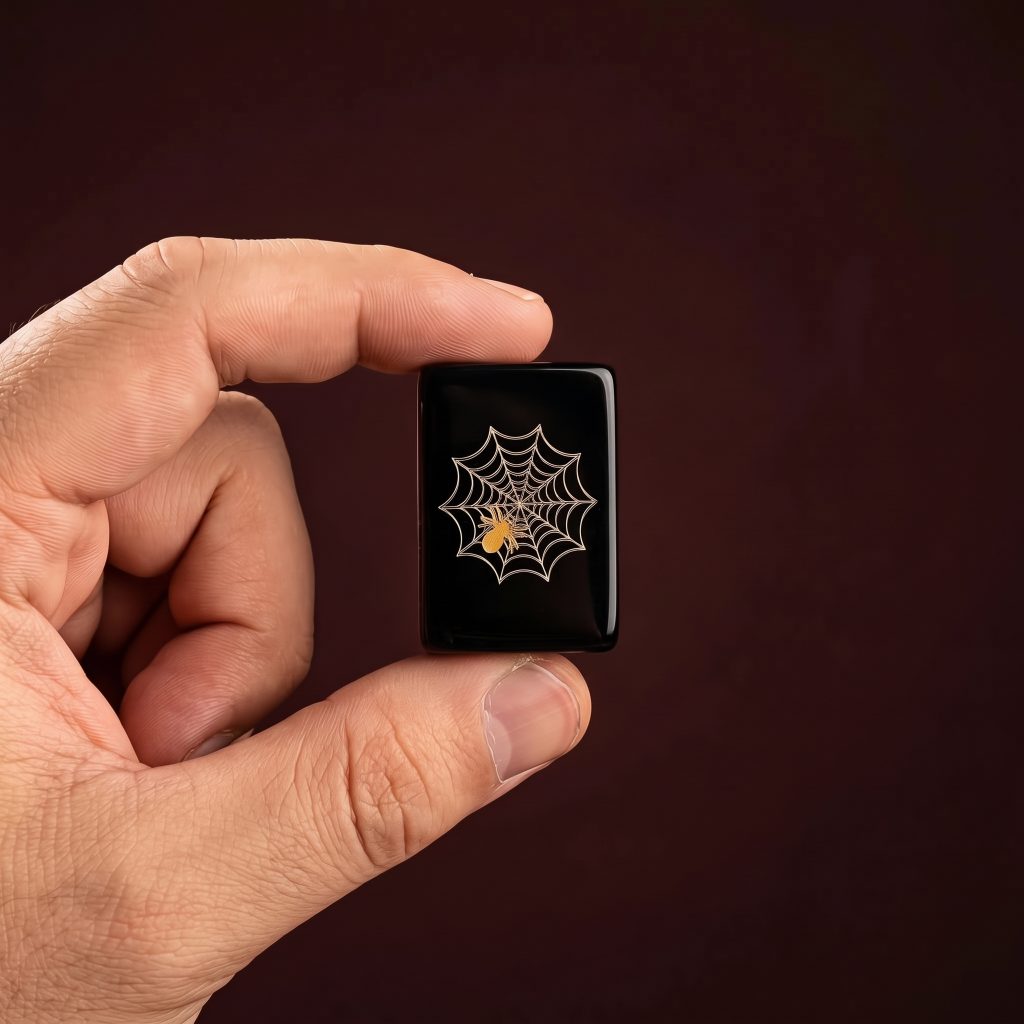
Custom acrylic American mahjong tiles combine distinctive artwork with a playing system that must remain easy to recognize and use. A successful project defines tile dimensions, layer construction, symbol identities, backing consistency, and decoration methods before production files are finalized. For brands and wholesale buyers, attractive illustrations are only part of the brief. This guide explains how to translate a design concept into organized artwork, evaluate physical samples, and approve a complete tile collection with clear references for repeat production.
The Design Brief and Production Boundaries
Begin with the intended collection: retail launch, club merchandise, promotional gift, or coordinated game accessory range. The purpose helps establish visual direction, packaging expectations, and the amount of customization required.
Decide whether the project changes only colors and backs, modifies selected faces, or introduces a complete illustrated set. These choices affect artwork preparation and sample review. A standard tile body with new graphics is a different project from a new size with a custom layer arrangement.
Obtain the supplier’s templates or layout specifications before drawing final faces, treating the project with the same planning discipline used in custom plastic fabrication services. Confirm finished dimensions, rounded corners, usable artwork areas, and the proposed decoration process. “Full customization” does not mean every feature can be produced without constraints.
Keep one written brief covering the approved concept, tile configuration, construction, artwork scope, accessories, and packaging. Identify which elements are fixed and which remain open for sampling. This prevents an attractive mockup from becoming an incomplete production specification.
Tile Identities and a Complete Artwork Manifest
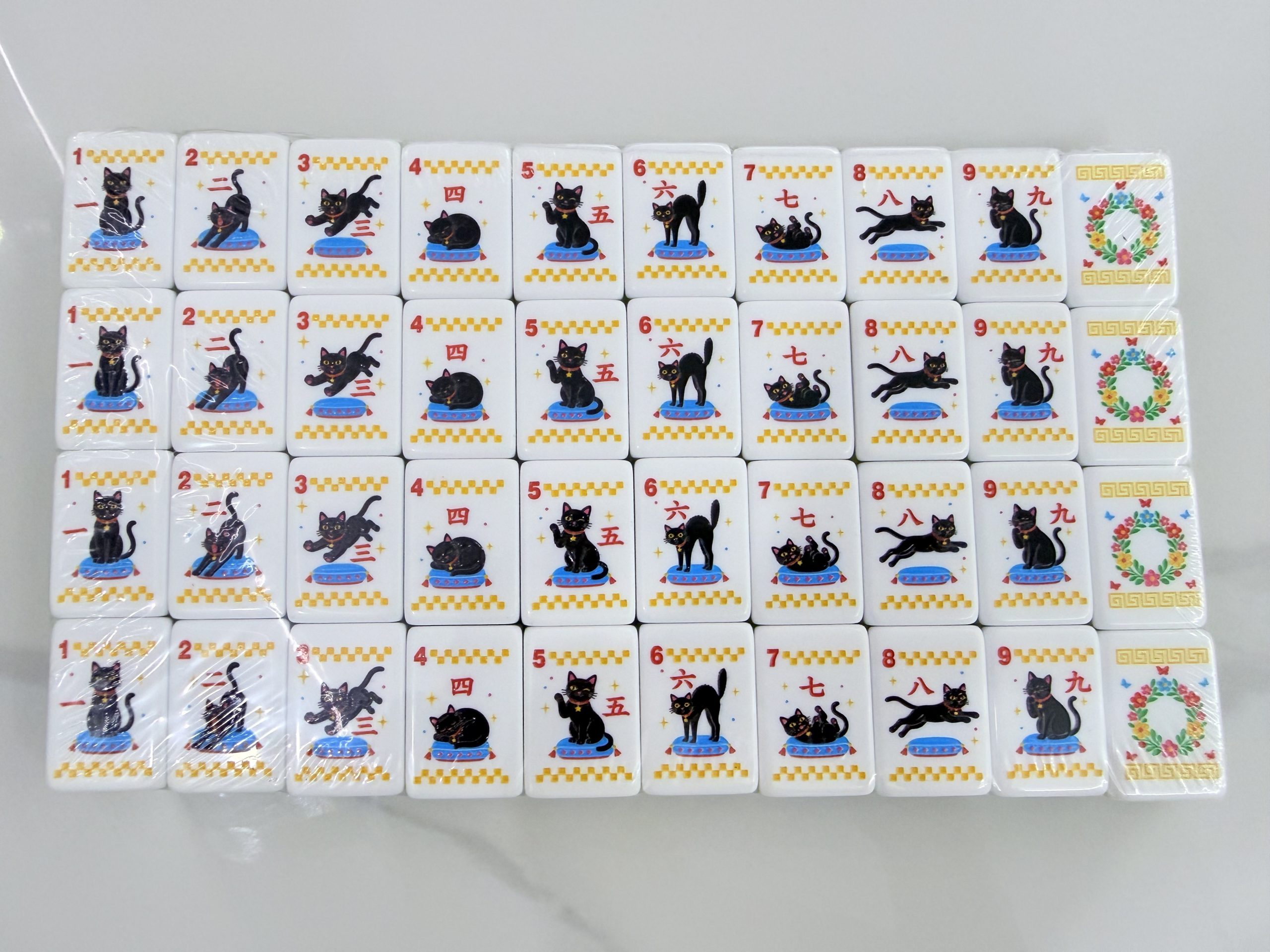
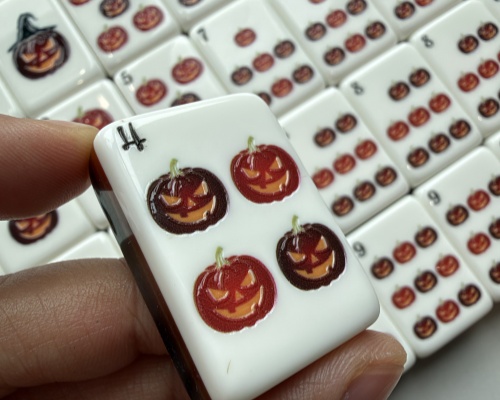
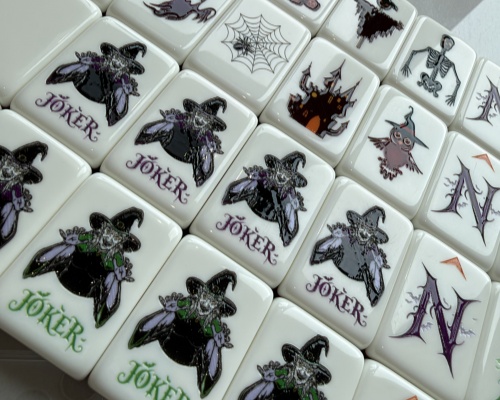
American mahjong artwork must communicate the identity of each tile clearly. Custom illustrations should preserve usable distinctions between suits, numbers, winds, dragons, flowers, and jokers.
Prepare an itemized manifest before allocating illustrations. A commonly used playing configuration has 152 tiles, while commercial packs may include additional jokers, blanks, or replacements. Specify the chosen configuration rather than relying on the advertised set total.
Assign each unique face a stable identifier and connect it to its production quantity. If different illustrations represent interchangeable flowers or jokers, state the identity and quantity of each version explicitly.
Do not create separate production files for every repeated copy unless the supplier requests them. Instead, link each approved face to the number of copies required. The manifest should also identify the common back design and any blank spare configuration.
Review the manifest and artwork together. Correctly drawn individual faces do not prevent an incomplete set if a design is omitted, duplicated, or assigned the wrong quantity.
Readable Symbols and Visual Hierarchy
A clear face usually separates essential identification from decorative detail. Establish consistent locations for numbers or letters and give the main symbol sufficient space.
Evaluate the artwork at actual tile size. Enlarged screen previews can disguise crowded strokes, tiny lettering, and weak contrast. Print a paper proof at scale for an early check, then confirm the result on physical acrylic.
Use shape and labeling alongside color. Players should not have to distinguish two tile identities solely by a subtle difference between shades. Keep the visual language consistent across suits while preserving obvious differences between them.
Check orientation as well. Decide whether the common back is directional and whether face layouts have a consistent top. Any intended variation should be documented, so the factory does not interpret it as an alignment error.
Acrylic Layers, Back Designs, and Branding
Layer construction and artwork should be developed together. A translucent accent band, white face, colored core, and backing layer interact visually; they are not independent color choices, and stock options such as colored acrylic sheets illustrate how tinted layers can shift the finished look.
Request a physical construction sample showing the proposed layer order and finished thickness. Explain whether graphics will be applied to an exposed surface, engraved into a face, or enclosed within the structure.
Decorative transparency must not reveal hidden tile identities. Compare different faces from the back and edges under realistic lighting, including light transmitted through the tile.
Apply the same backing treatment consistently across the playing set. Avoid face-specific logos, edge colors, or positioning differences that identify a tile while concealed. Where patterned stock creates random variation, inspect whether distinctive individual backs could become recognizable during repeated play.
A small logo can work on the common back, case, or accessories. Choose its position based on visibility and production capability rather than forcing it into crowded face artwork. Packaging often offers more room for brand information without affecting playability.
Decoration Methods and Artwork Detail
The manufacturing method determines which details can be reproduced reliably. Discuss the process before approving thin lines, gradients, tiny text, or closely spaced shapes, and align expectations with proven approaches to printing on plastic sheets when surface graphics are planned.
| Decoration approach | Design issue to resolve |
|---|---|
| Engraving with color filling | Recess geometry, separation between colors, and filling access |
| Direct surface printing | Fine-detail reproduction, ink adhesion, and exposed wear |
| Printing beneath a protective layer | Layer clarity, alignment, and the effect on color |
| Mixed decoration methods | Consistent appearance across differently produced faces |
Vector artwork is useful for clean outlines and editable shapes. However, engraving file requirements depend on the equipment, workflow, and effect required. Confirm the supplier’s accepted formats rather than treating one format as universally mandatory.
Printing may also accept vector files, raster images, or mixed documents. Ask for minimum feature sizes based on the actual process, material, and finished tile. A generic resolution requirement cannot guarantee that delicate strokes or small lettering will remain readable.
Production Files, Templates, and Color References
Create files at the supplier’s requested physical scale, normally with clearly identified tile and artwork boundaries. Keep cut outlines, face graphics, and technical notes separate.
Follow the approved safe area around rounded corners and finished edges. The required margin depends on tile geometry, registration accuracy, and finishing; do not impose a universal distance without supplier confirmation.
For vector files, outline fonts or include them according to the supplier’s workflow. Check for missing links, unwanted clipping masks, duplicate paths, and hidden objects. A file with a vector extension can still contain low-resolution embedded images.
For raster artwork, confirm effective resolution at final output size. Around 300 pixels per inch is a common starting point for print discussion, but detailed artwork may require a different target. Increasing the resolution setting does not restore detail missing from the original image.
Agree on color references and the printer’s color workflow. Pantone references or physical swatches can communicate targets, but ink, acrylic tint, white underprinting, surface finish, and lighting affect the result. Use a finished physical sample for final approval.
File Organization and Revision Control
A production package should make the current design unmistakable. Use named files or artboards that correspond to the tile manifest, and include a visual index showing every unique face.
Include these items in the handoff:
- The current tile manifest with quantities and face references.
- Editable artwork and the supplier’s required production exports.
- A visual proof of all faces, the common back, and orientation.
- Construction and color references for the approved sample.
- Separately identified packaging and accessory artwork.
Physical Sampling and Production Approval
Screen proofs are useful for checking content, but they cannot establish texture, edge appearance, transmitted-light privacy, or reliable color matching.
Ask the supplier what the initial sample represents. A printed mockup on stock blanks may demonstrate artwork while leaving the final layer structure unresolved. Approval should clearly distinguish concept samples from production-representative samples.
Review the sample under ordinary playing conditions. Compare artwork with the manifest, inspect alignment, and ask players to identify unfamiliar designs. Check that small details survive the actual finishing process.
Where practical, approve a complete set before bulk production. This allows review of face counts, visual consistency, backing variations, and packaging fit. Define acceptable appearance variation and agree on any handling, adhesion, or cleaning tests relevant to the decoration.
Retain a signed or otherwise clearly identified reference sample. Confirm that repeat orders will use the same controlled files and construction, with any material or process changes submitted for review.
Conclusion
Custom acrylic American mahjong tiles succeed when design decisions are translated into clear, controlled production information. Define the playing configuration and tile structure first, then develop readable faces, consistent backs, and artwork suited to the selected decoration method. Organize files through a manifest and revision record, and approve colors and construction using representative physical samples. A complete set review connects individual illustrations with actual playability. This approach helps brands preserve their visual identity while reducing avoidable errors in repeat production, and it complements broader discussion of why acrylic has become a preferred material for American mahjong sets.