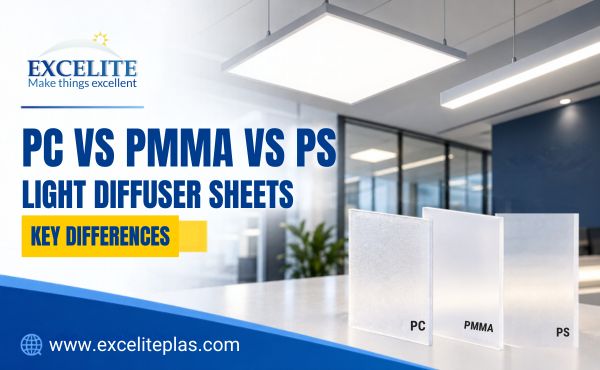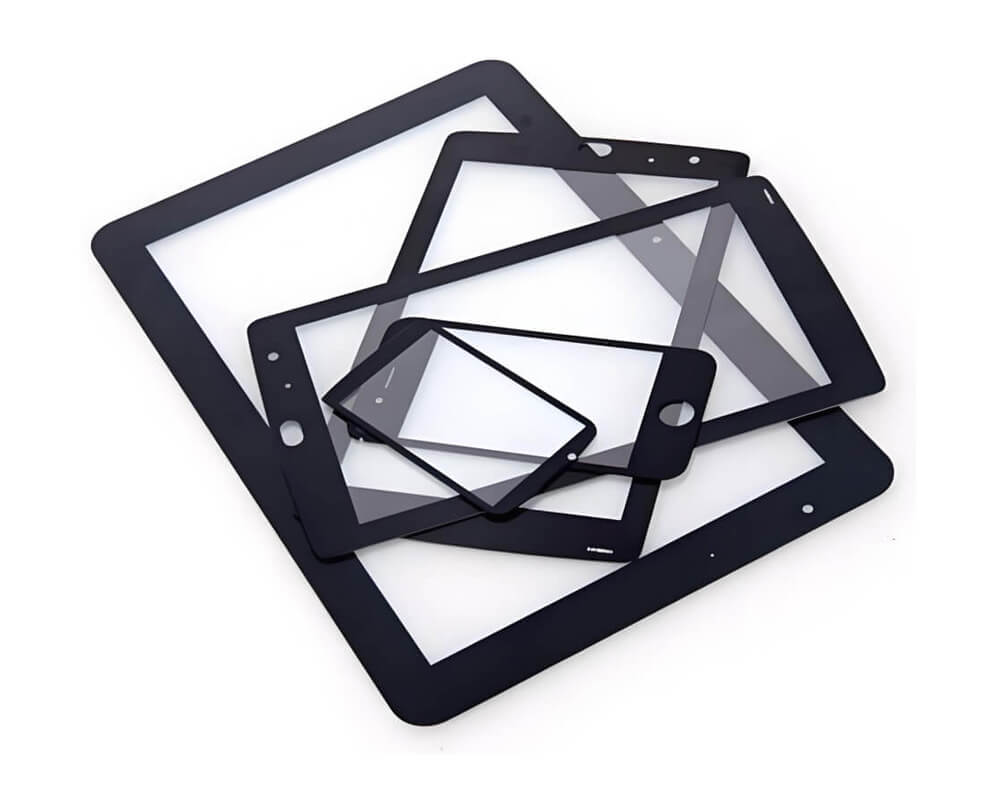
PC, PMMA, and PS light diffuser sheets can look similar, but they suit different lighting requirements. Polycarbonate (PC) generally offers the strongest impact resistance and higher heat tolerance. Acrylic (PMMA) combines strong optical performance with good natural weather resistance. Polystyrene (PS) provides economical options for indoor lighting.
These differences guide material selection, but resin names alone cannot predict finished-sheet performance. Thickness, diffusion additives, surface textures, and protective treatments also matter. Lighting manufacturers should compare specific grades and test samples in their intended fixtures before approving materials.
PC vs PMMA vs PS: Comparison at a Glance
| Selection factor | PC diffuser sheets | PMMA diffuser sheets | PS diffuser sheets |
|---|---|---|---|
| Main advantage | Impact resistance and heat tolerance | Optical performance and weather resistance | Lower material cost |
| Light transmission and diffusion | Depend on grade, thickness, and formulation | Depend on grade, thickness, and formulation | Depend on grade, thickness, and formulation |
| Impact resistance | Generally highest among these materials | Lower than PC; impact-modified grades differ | Generally low for standard grades |
| Heat tolerance | Generally higher | Generally intermediate | Generally lower |
| Outdoor suitability | Select UV-protected grades | Often suitable with appropriate grades | Usually intended for indoor applications |
| Fabrication considerations | Predrying typically needed for thermoforming | Protect edges from stress and allow thermal movement | Check brittleness and forming limits |
| Relative cost | Often higher | Often intermediate | Often lower |
These are general trends, not guaranteed specifications. Specialty formulations, order volumes, and processing requirements can change performance and pricing. Flame classifications must be checked separately for each grade and thickness.
How Light Diffuser Sheets Work
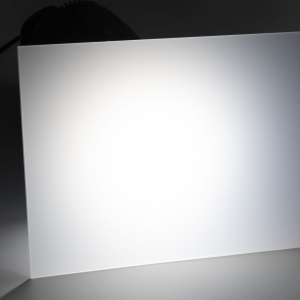
Light diffuser sheets spread light through internal scattering particles, surface structures, or combinations of both. They help soften visible LED points and improve illumination uniformity in luminaires, signs, and backlit displays.
Total light transmittance describes how much incident light passes through sheets. Haze describes the proportion of transmitted light scattered beyond the angle defined by the measurement method. Higher haze indicates stronger wide-angle scattering, but it does not automatically mean greater light loss or complete hotspot concealment.
Two sheets with similar haze and transmittance can produce different results because their scattering patterns differ. LED spacing, diffuser-to-LED distance, and reflector design affect the final appearance. Optical specifications help narrow choices; testing within fixtures determines whether those choices work.
PC Diffuser Sheets: Impact Resistance and Heat Tolerance
PC diffuser sheets are useful where impacts, handling damage, or elevated operating temperatures are important concerns. Compared with standard PMMA and PS grades, PC generally tolerates mechanical abuse better. Applications include public-area lighting, protective luminaire covers, and fixtures exposed to frequent maintenance.
PC also generally offers higher heat tolerance. However, this does not make every PC sheet suitable for every high-output LED system. Actual temperatures at the diffuser, mounting loads, and long-term thermal exposure must remain within the selected grade’s limits.
Outdoor PC requires attention to UV protection. UV-stabilized formulations or protective surface layers can improve weathering performance. If protection is applied to one side, installation orientation matters.
Processing can affect durability. PC typically requires predrying before thermoforming, while unsuitable cleaners and residual fabrication stress can contribute to cracking. Grade approval should therefore include both operating conditions and manufacturing methods.
PMMA Diffuser Sheets: Optical Performance and Weather Resistance
PMMA diffuser sheets are widely used in illuminated signs, display systems, and luminaires where appearance and weather resistance matter. Acrylic offers strong optical properties and generally good natural resistance to sunlight.
Nevertheless, clear acrylic’s transparency does not establish the transmittance of finished acrylic diffuser sheets. Diffusion additives, pigments, thickness, and surface treatments change the result. Claims that PMMA always transmits more light than PC or PS at equivalent haze require comparable product data.
PMMA’s main tradeoff is lower impact resistance than PC. Thin edges, drilled holes, and tight mounting points can become vulnerable areas. Thermal expansion also requires clearance: rigid clamping can create stress as temperatures change.
For outdoor signage and low-impact exterior lighting, appropriate PMMA grades are often strong candidates. Approval should still consider cleaning chemicals, operating temperatures, and weathering evidence rather than assume unlimited outdoor service life.
PS Diffuser Sheets: Economical Indoor Options
PS diffuser sheets are commonly considered for cost-sensitive indoor luminaires and display backlights. Suitable formulations can provide effective diffusion without the higher material costs often associated with PC and PMMA.
Their main limitations are impact resistance, heat tolerance, and outdoor weathering. Standard PS grades can be brittle, so edge quality, packaging, and assembly handling deserve attention. Temperatures near LEDs must also remain within the approved grade’s limits.
PS should not automatically be described as disposable or short-lived. Properly specified sheets can serve indoor fixtures effectively. Suitability depends on the operating environment, formulation, and required service life.
For direct sunlight or outdoor exposure, standard PS is generally a less suitable starting point. Specific yellowing timelines cannot be predicted without exposure conditions and relevant test data.
How to Choose Materials for Lighting Applications
Begin with requirements that could disqualify materials, such as impact loads, operating temperatures, outdoor exposure, or mandatory flame classifications. Then compare optical performance and total production cost.
- Public-area and impact-prone lighting: Start with PC grades, then verify diffusion, thermal limits, and the required mechanical performance.
- Outdoor signs and low-impact exterior lighting: Consider weather-resistant PMMA grades; evaluate UV-protected PC when impact resistance is also needed.
- Cost-sensitive indoor panels: Compare PS with entry-level PMMA and PC options after confirming temperature and handling requirements.
- Shallow fixtures with visible LED points: Evaluate diffusion formulations across all suitable materials. Resin selection alone will not solve hotspots.
Fire requirements need separate verification. UL 94 classifications apply to tested materials under specified conditions, including thickness. They do not establish compliance of complete luminaires. Request documentation for the actual proposed grade and confirm the applicable fixture requirements.
Total cost should include cutting waste, forming, packaging, assembly rejects, and expected replacements. Lower sheet prices may deliver little saving if brittle edges cause frequent production losses.
Learn More About Best LED Diffuser Material Here
How to Compare Diffuser Samples Fairly
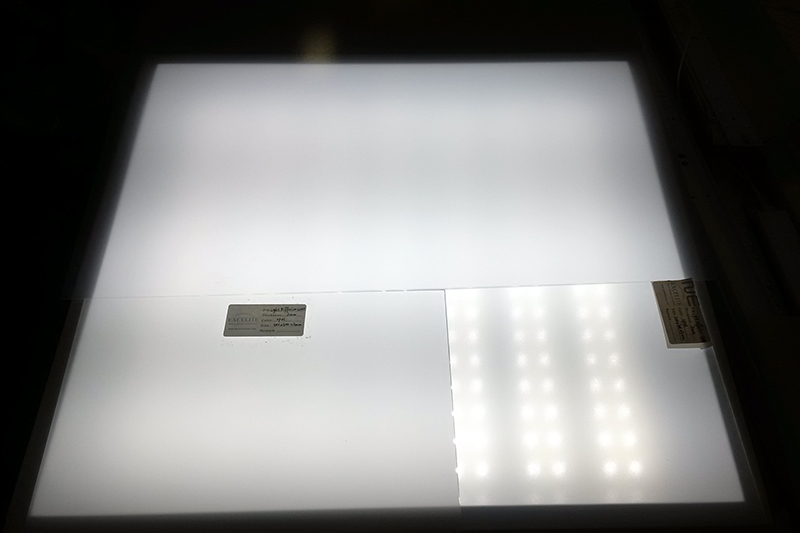
Use samples matching the intended production thickness and surface finish. Keep LED spacing, mounting distance, electrical input, and reflector geometry unchanged so material differences are meaningful.
- Check visual uniformity: Inspect LED points, dark bands, and edges from intended viewing distances and angles.
- Compare light output and color: Use measurements where available; identical camera exposure supports visual comparison but cannot replace photometric testing.
- Run at operating temperature: Evaluate deformation and mounting behavior after temperatures stabilize.
- Review supporting documentation: Confirm optical test methods, thickness tolerances, thermal guidance, flame classifications, and weathering evidence where relevant.
For example, changing from PS to PMMA may not eliminate hotspots if LEDs remain too close to the diffuser. Stronger scattering, greater separation, or different LED spacing may produce more improvement. Sample testing identifies the actual constraint before production commitments.
Conclusion
PC generally suits impact-prone and warmer operating conditions, PMMA offers strong optical and weathering advantages, and PS supports economical indoor designs. The best choice comes from matching specific grades to fixture requirements and validating samples under realistic conditions. Compare finished-sheet performance rather than relying on material names or headline properties alone.
FAQ
Which diffuser materials transmit the most light?
PMMA offers strong optical performance, but finished-sheet transmittance depends on thickness and formulation. Compare actual diffuser grades under equivalent test conditions rather than using clear-resin data.
Can PC diffuser sheets be used outdoors?
Yes, appropriate UV-protected grades can suit outdoor lighting. Check weathering documentation and any installation requirements for protective surface layers.
Are high-haze sheets always better at hiding LEDs?
No. Haze is useful, but scattering distribution, LED spacing, and mounting distance also determine hotspot visibility. Verify the result in the intended fixture.
Can PS replace PMMA in indoor lighting?
Potentially, when optical performance, temperatures, handling durability, and safety requirements are met. Validate samples and production behavior before approving substitutions.