Flame-retardant polycarbonate hollow sheets can serve as lightweight panels in data center aisle containment systems. Their main function is to help separate supply air from warm exhaust air, supporting more controlled airflow around IT equipment.
Suitable panels can be used in framed walls, doors, gap closures, and certain overhead containment arrangements. However, a flame-retardant sheet is not a fire barrier. Its acceptance depends on the exact product, applicable fire requirements, and the design of the complete containment system.
Where Hollow Polycarbonate Sheets Fit
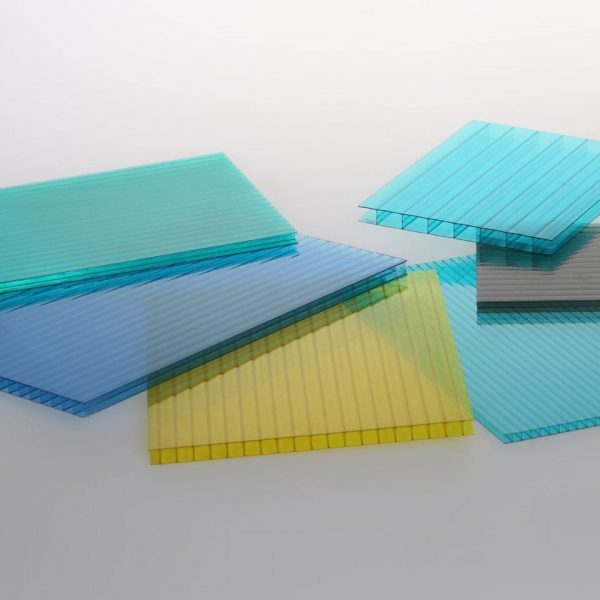
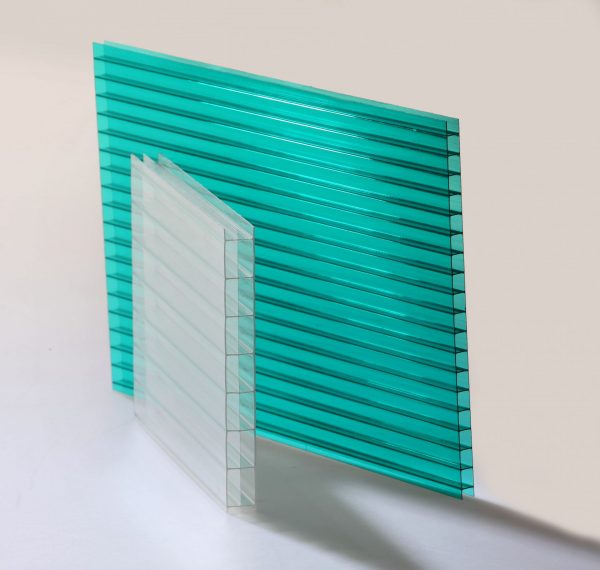
Hollow polycarbonate sheets contain internal channels separated by thin walls. Twinwall sheets have two main outer faces connected by ribs, while multiwall products use more complex internal structures.
This construction provides a panel with relatively low weight for its overall thickness. It can be useful where installers need to move, trim, or replace framed infill panels.
In a data center, the sheet normally forms part of a supported enclosure. The frame carries the relevant structural loads and provides panel retention.
Commercial containment systems include twinwall and solid polycarbonate among their panel options, confirming their established role in this application.
These panels should not be assumed suitable for floors, load-bearing shelving, or fire compartment walls simply because they are used within a data center.
Main Applications in Aisle Containment
Cold Aisle Containment
Cold aisle containment encloses the area supplying cool air to server inlets. The enclosure helps reduce mixing with warmer room air.
Hollow polycarbonate panels may form side sections, doors, gap closures, or overhead surfaces within the approved design.
The value of the panel depends on the enclosure’s continuity. Gaps around doors, rack heights, cables, and irregular openings can allow air to bypass the intended route.
A lightweight panel that fits securely and seals properly may contribute more than a heavier panel installed with large leakage paths.
Hot Aisle Containment
Hot aisle containment captures warm exhaust air behind equipment and directs it toward the cooling return path.
Here, panel selection must consider the temperatures that occur during expected operation and foreseeable abnormal conditions.
The design also needs to accommodate maintenance access, rack changes, and connections to return-air infrastructure.
The panel itself does not cool the equipment. It supports airflow separation, which must work with the cooling system, control settings, and available capacity.
Doors, Vertical Panels, and Gap Closures
Containment often needs infill pieces around uneven rack arrangements or existing building features.
Framed hollow sheets can provide a practical way to close these openings while maintaining some light transmission.
Door panels require additional consideration because they experience movement and repeated handling. Hinges, latches, handles, and frame stiffness influence durability.
Any viewing requirement should be checked using an actual sample. The internal ribs of hollow sheet interrupt the view compared with clear solid glazing.
Overhead Containment Panels
Overhead panels can complete the airflow enclosure, but they also interact with fire detection and suppression.
An enclosure beneath ceiling-mounted sprinklers may obstruct discharge or change how heat and smoke reach detection equipment.
For that reason, roof panels must be part of a coordinated system design. Some commercial systems use retractable roofs that open following a fire-system signal. This is a designed system feature, not an inherent behaviour of polycarbonate sheet.
Why Hollow Panels Are Used
Weight and Handling
Lower panel weight can simplify installation and reduce the effort needed for later changes.
This is useful in operational facilities where replacement work must be planned around equipment access and controlled working conditions.
However, lightweight construction does not remove the need for secure retention. Pressure differences, door movement, accidental contact, and maintenance activity can all act on panels.
Light Transmission
Translucent panels can allow existing room lighting to reach enclosed aisles. This may reduce the visual separation created by opaque walls.
Transmission varies with colour, thickness, wall configuration, and surface condition. The presence of a translucent panel does not guarantee that task-lighting requirements are met.
Check the lighting conditions after installation, particularly where staff need to read equipment labels or inspect connections.
Airflow Separation
The central benefit of containment comes from controlling air movement. Insulating properties can have a secondary role, but gaps, bypass airflow, and cooling-system operation often have greater practical importance.
Energy savings cannot be assigned to a sheet material alone. They depend on the original airflow problem, enclosure leakage, cooling equipment, control strategy, and operating conditions.
Avoid using a general savings percentage as a guaranteed result for a particular facility.
Understanding Flame-Retardant Claims
Material Flammability Ratings
UL 94 evaluates the burning behaviour of plastic specimens under defined small-scale test conditions.
A rating such as V-0 does not establish a fire-resistance period, noncombustibility, or acceptance as an interior finish. UL specifically explains that its small-scale ratings cannot replace the other fire ratings required by building codes.
A supplier’s reference to a flame-retardant resin also does not automatically demonstrate the performance of an extruded hollow sheet.
The product construction, wall thickness, colour, and other conditions need to match the supporting evidence.
Surface-Burning and Reaction-to-Fire Classifications
Projects may specify tests addressing surface flame spread, smoke development, or broader reaction-to-fire behaviour.
For example, ASTM E84 and EN 13501-1 describe different evaluation and classification frameworks. Their results are not interchangeable labels.
Similarly, a classification associated with one standard should not be described as universal approval for all data center applications.
The required evidence should come from the project specification and relevant authority, with clarification from the fire-protection design team where needed.
What Flame Retardancy Does Not Establish
Flame retardancy does not mean the panel will remain intact throughout a fire or prevent heat from reaching adjacent equipment.
It also does not independently establish low smoke production, acceptable smoke toxicity, or a particular heat-release performance.
Each claimed property needs relevant evidence. Broad phrases such as “fireproof panel” obscure these distinctions and should be avoided in specifications.
Matching Documentation to the Supplied Panel
Before accepting a fire-performance claim, check whether the report identifies:
- The manufacturer and exact product designation.
- The tested sheet structure and thickness.
- Relevant colour or formulation restrictions.
- The test method and achieved classification.
- Mounting details and other limitations.
- The relationship between the tested sample and supplied product.
Nominal panel thickness deserves particular attention. A hollow sheet’s overall thickness is different from the thickness of its individual faces and ribs.
Do not assume that a resin rating at a stated specimen thickness maps directly to a hollow panel with the same overall dimension.
Traceability also matters. Purchasing records should preserve the product identity so later replacement panels can be checked against the original requirements.
Panel Selection and Installation Requirements
Stiffness, Support, and Retention
Choose the panel using its span, frame geometry, pressure exposure, and handling conditions.
A sheet that works in a small framed opening may flex excessively in a much larger one.
Retention should remain reliable during routine operation, including repeated door movement and maintenance access. Cutouts and unsupported edges can change the behaviour of an otherwise suitable panel.
Edges, Cleanliness, and Access
Cutting creates open channels and may leave swarf inside the sheet. Edge finishing and closure methods should follow the product and system requirements.
The selected arrangement should support cleanliness without interfering with expansion or any approved release mechanism.
Maintenance access should be planned before installation. Panels may need to be removed for cable work, equipment changes, or inspection.
ESD and Other Special Requirements
Standard polycarbonate should not be assumed to provide electrostatic-dissipative performance.
Where ESD control is required, specify measurable electrical properties and the conditions under which they must be maintained.
Likewise, claims about low outgassing or chemical cleanliness require appropriate product evidence. A material used successfully in one facility may not satisfy another facility’s environmental specification.
Coordination with Fire Detection and Suppression
The containment layout should be reviewed alongside sprinkler coverage, detection, alarms, access, and any required opening arrangements.
A release or retracting roof must function as part of the approved design. Its operation depends on mechanisms, controls, installation, and maintenance.
Do not assume that a plastic roof will melt away at the correct time or leave an adequate opening.
Future alterations also need review. Adding panels, closing an opening, or changing the roof arrangement can affect the original fire-protection assumptions even when the same material is used.
Frequently Asked Questions
Can hollow polycarbonate form a server-room fire partition?
An ordinary containment panel cannot substitute for a required fire-resistance-rated partition. A fire partition needs the specified tested assembly and installation details, including treatment of openings and penetrations.
Is solid polycarbonate better for viewing windows?
It generally provides a clearer view because it has no internal ribs. The final choice still depends on impact, fire, surface, and optical requirements.
Can containment panels be reused after a rack-layout change?
Often they can, provided the panels remain undamaged, fit the new frames, and retain the necessary documentation. Changes to dimensions, support, or fire-system interaction require assessment.
Does an antistatic cleaner make ordinary sheet ESD compliant?
It should not be treated as a substitute for a specified ESD material system. Surface treatments may have limited durability and variable performance. Verify the required resistance range and maintenance conditions.
Conclusion
Flame-retardant polycarbonate hollow sheets can provide practical infill panels for data center airflow containment. Their usefulness depends on secure installation, controlled leakage, suitable documentation, and compatibility with operational requirements.
Select the exact panel and containment arrangement together, with fire detection and suppression included in the design review.