
Excelite

The Complete Buyer’s Guide to Custom Plastic Fabrication Services

Custom plastic fabrication — practical solutions for real industrial challenges.

From prototype to high-volume production, custom plastic parts solve problems metals, wood, and off-the-shelf components can’t. Whether you need to reduce weight, increase durability, improve safety, or create a part that doesn’t yet exist, the right fabrication partner turns an idea into a repeatable, high-quality product.

Who uses custom plastic fabrication

Manufacturing, construction, agriculture, transportation, retail (POP/point-of-purchase displays), medical, food handling, and countless other industries rely on custom plastic parts: machine guards, display cases, enclosures, fixtures, brackets, and more.

What Is custom plastic fabrication?

Custom plastic fabrication is the end-to-end process of converting raw thermoplastics and engineered plastics into parts built to your exact specifications. Typical steps and capabilities include:

  • Design & CAD / Computer-Aided Design and Design for Manufacturability (DFM)
  • Prototyping (3D printing, CNC milled prototypes)
  • Plastic sheet fabrication (laser cutting, CNC routing, die cutting, heat bending, edge finishing)
  • CNC machining / CNC router for tight tolerances and complex geometries
  • Thermoforming & vacuum forming / drape forming for large, lightweight parts
  • Plastic welding, bonding, and custom assembly for finished, ready-to-use units
  • Quality control & inspection to meet strict tolerances and repeatability
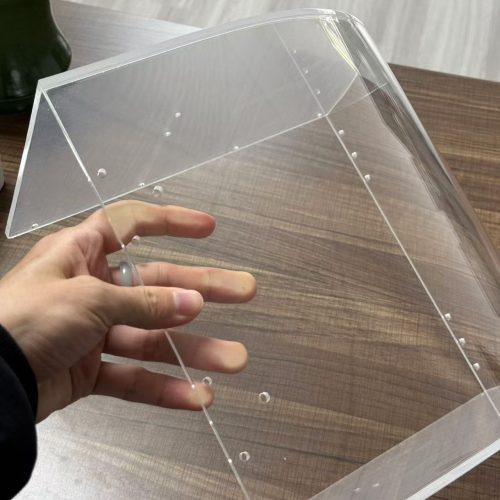
bending polycarbonate enclosures

Materials we commonly work with

Choosing the right material is critical to performance and longevity. Typical options:

  • Polycarbonate (PC) — highest impact resistance; ideal for safety shields and machine guards
  • Acrylic (PMMA) — crystal clear for displays and retail fixtures
  • HDPE — durable, wear-resistant, food-safe applications
  • PVC / Polypropylene — chemical resistance and industrial use
  • Outdoor-grade PC/Acrylic — UV stabilized to resist yellowing
  • Specialty performance plastics available on request

A fabrication partner with material expertise will recommend the right plastic for strength, heat resistance, chemical exposure, clarity, and cost.

Small batches, fast turnaround, or high volume — we handle all

1.“I only need 20–50 parts. Will any manufacturer even take the job?”

This is one of the most common concerns.

Many customers worry they only need 20–50 parts. Modern techniques (CNC machining, sheet fabrication, vacuum forming, laser cutting) eliminate expensive tooling and make small-batch production affordable and quick. When volumes scale, processes and sourcing adjust to maintain cost efficiency and consistent quality standards.

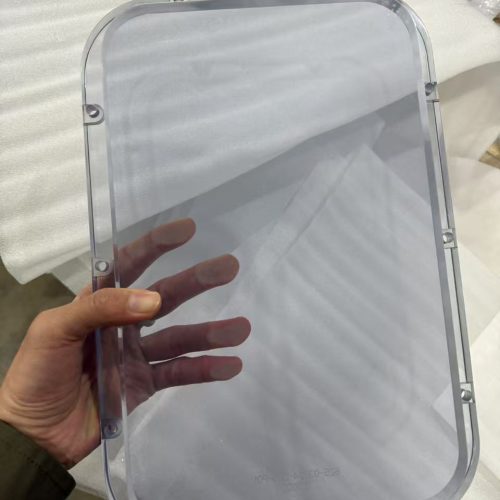
polishing polycarbonate

Common fabrication processes — when to use each

2. “Should I use 3D printing, CNC, or vacuum forming?”

  • 3D Printing — fast concept models and early prototypes.
  • CNC Machining / CNC Routing — best for functional parts that require tight tolerances (typical ±0.25–0.5 mm) and strong mechanical properties.
  • Vacuum / Thermoforming — efficient for large covers, enclosures, and lightweight panels.
  • Laser Cutting & Bending / Heat Bending — perfect for acrylic displays, guards, and precise sheet work.
  • Die Cutting — high-speed processing for gaskets, seals, and repetitive shapes.

Process selection depends on quantity, mechanical requirements, finish, complexity, and budget—and a good fabricator will guide you to the most cost-efficient method.

Materials we commonly work with

3. “Which plastic material should I use? I don’t want to choose wrong.”

Choosing the right material is critical to performance and longevity. Typical options:

  • Polycarbonate (PC) — highest impact resistance; ideal for safety shields and machine guards
  • Acrylic (PMMA) — crystal clear for displays and retail fixtures
  • HDPE — durable, wear-resistant, food-safe applications
  • PVC / Polypropylene — chemical resistance and industrial use
  • Outdoor-grade PC/Acrylic — UV stabilized to resist yellowing
  • Specialty performance plastics available on request

A fabrication partner with material expertise will recommend the right plastic for strength, heat resistance, chemical exposure, clarity, and cost. 

Accuracy, tolerances & quality control

4. “I need ±0.5mm precision. Is that even possible with plastic?”

If you need precision—say ±0.5 mm—CNC machining and strict inspection processes make it achievable. Typical tolerances:

  • CNC-machined components: ±0.25–0.5 mm
  • Thermoformed / bent parts: ±1–2 mm

Quality control includes first-article inspection, in-process checks, and final verification to ensure repeatable results. 

Design help when you only have an idea

You don’t need finished CAD to start. Fabricators commonly take:

  • sketches, photos, samples, or rough ideas
    and provide:
  • 3D modeling, engineering drawings, feasibility checks, and prototypes—bridging the gap between concept and production.

Real benefits for your project

Custom plastic fabrication helps you:

  • Cut unnecessary costs by choosing the right process and material
  • Avoid failures from incorrect material selection
  • Speed up product development with rapid prototyping and DFM
  • Replace or improve outdated components
  • Deliver consistent, repeatable quality across batches
  • Create POP displays and retail fixtures that stand out

Turnaround times & lead-time planning

Lead times depend on design complexity, material availability, and order size. Typical examples:

  • Rapid prototype turnaround (days to weeks)
  • Small-batch production (1–3 weeks typical, depending on finish and assembly)
  • High-volume runs (scheduled per production plan and materials)

A fabrication partner that manages material sourcing, planning, and production scheduling can dramatically reduce overall time to market.

Quick FAQ

Q: Can you do one-off parts?
A: Yes—prototyping and CNC/sheet processes make single units practical.

Q: How do I pick the right material?
A: Start with the part’s environmental, mechanical, and visual needs—an experienced supplier will recommend suitable plastics and finishes.

Q: Do you make POP displays and point-of-purchase fixtures?
A: Yes—we produce display cases, retail fixtures, and custom signage with high finish and repeatable quality.

Next steps

Have a sketch, photo, or part number? Send it over and we’ll help with CAD, material selection, prototype options, and a clear quote. 

For examples of capabilities and to learn how Excelite Plastics can support your next plastic fabrication project, visit:

Plastic Sheet Fabrication

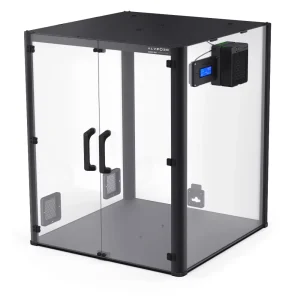
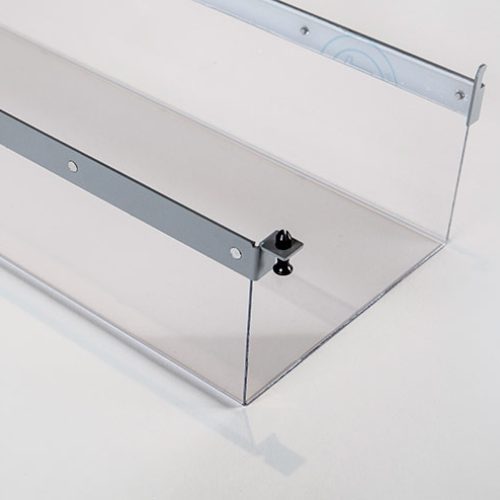
plastics box enclosure

MORE ARTICLES


TAILORED POLYCARBONATE SOLUTION

Get a Quote Today

Looking to transform your vision into a tangible product? 

At Excelite Plastics, we understand that every project is unique.

sales@exceliteplas.com

+61452 396 680

Click or drag a file to this area to upload.