Excelite

Anti-Static Polycarbonate Sheet

Anti-Static Polycarbonate Sheet (ESD PC) | Cut-to-Size & Fabrication — Excelite

Minimize electrostatic discharge in sensitive environments with our anti-static polycarbonate sheets. Shop Now. ESD panels are utilized in cleanrooms and the semiconductor industry.
Description

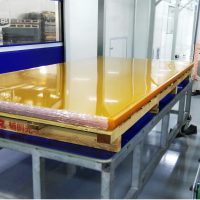
Anti Static Polycarbonate sheets design to dissipate static on the transparent plastic sheet’s surface. This coating also offers anti-scratch, chemical resistant.

Protecting against electrostatic discharge (ESD) is crucial when handling sensitive electronic components and assemblies. ESD(anti static), short for electrostatic discharge, involves the sudden release of accumulated static electricity. If not properly managed, this occurrence can harm electronic parts.

Developed specifically to control static build-up. These transparent polycarbonate sheets are coated to shield against potentially dangerous static electricity. Lightweight and strong, these sheets are ideal for a wide variety of applications, including cases for electronics, high-voltage switches, and coverings for instrument gauges, solar rod housings, and thermometers. They are widely used in applications like access panels, static control shields, glove boxes, windows, and doors. The transparent coating on these sheets is perfectly suited for electrically conductive surfaces, reducing the potential for latent damage and product rejects due to static discharges.

This product is also commonly known by several other names, including:

  • ESD Plastic Sheet
  • Anti-scratch Polycarbonate Sheet
  • Static Dissipative Plastic
  • ESD Safe Plastic


Product Features & Benefits

  • Protection against Electric Discharge Events
  • Permanent Anti-static feature. Same lifespan with polycarbonate sheet
  • Excellent chemical resistance with reduced risk of solvent attack.
  • Cannot be tribocharged when properly grounded – prevents static buildup
  • Abrasion resistance and Anti-scratch
  • Superior impact resistance. It’s 250 times than glass, 30 times than Acrylic sheet.
  • High clarity. The highest light transmission can reach 92%
  • Flammability Rating

Specs First

  • Sheet sizes (cut): A4 (210×297 mm), A3, 610×762 mm, 760×1016 mm, 1220×2440 mm (custom available)
  • Surface resistivity (sheet resistance) range and test standard:

    • Typical range: 10^4 to 10^12 ohms/square depending on grade
      • Conductive grades: 10^4 – 10^7 Ω·m
    • Test standard: ASTM D257 (surface resistivity) or IEC 61340-2-3 for ESD materials; measurements typically at 23±2 °C, 50±10% RH
  • Optical clarity / haze:

    • Clear optical grades: Total transmission 88–92%, haze 0.5–2%
    • Matte / anti-glare grades: transmission 50–85%, haze 10–60% depending on texture
  • Operating temperature range:

    • Continuous: -40 °C to +110 °C (standard amorphous PC)
    • Short-term / peak: up to 130–140 °C (depends on coatings and exposure time)
    • Note: PC has higher heat resistance than PET but lower than high-temp polymers; dimensional stability under heat/humidity should be verified per application

Major Characteristics of Anti-static Polycarbonate Sheet

  • Static charge-resistant; prevents static buildup when properly grounded.
  • Dissipation of electrostatic charge in less than 0.05 seconds, as measured by Federal Test Standard 101C, Method 4046.1 (rapid dissipation without arcing).
  • No need for ionizers or coatings to achieve ideal surface resistivity.
  • Static dissipation effectiveness that doesn’t degrade over time or require recoating.
  • Control of static electricity independent of relative humidity.
  • Use of cutting-edge technology and consistent coating eliminates “hot spots.”
  • Above-average fabrication qualities simplify the design and installation process.
  • Naturally lightweight and widely available in sheet form.
  • Enhanced chemical stability and reduced susceptibility to solvent attack.

Applications of Anti-static Polycarbonate Sheet

When it comes to electrical safety, anti-static polycarbonate is an ideal material. This type of polycarbonate has been specifically designed to resist the buildup of static electricity, which can be dangerous in certain circumstances. Anti-static polycarbonate is often used in electronic equipment and devices, as well as in areas where flammable materials are present.

As a result, it can be used in the

  • Semi-Conductor
  • ESD machine guards
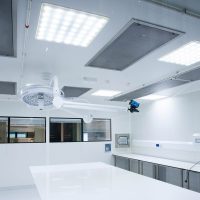
  • Electronic, electronic cleanrooms and Micro-Manufacturing Industries
  • Access panels or cover, enclosure for electronic equipment covers 
  • PCB handling areas
  • Equipment windows
  • Partitions for data centers 
  • Clean room space partition
  • Doors, access panels for electronic equipment
  • Assembly machines, instruments
  • Transparent observation windows or doors
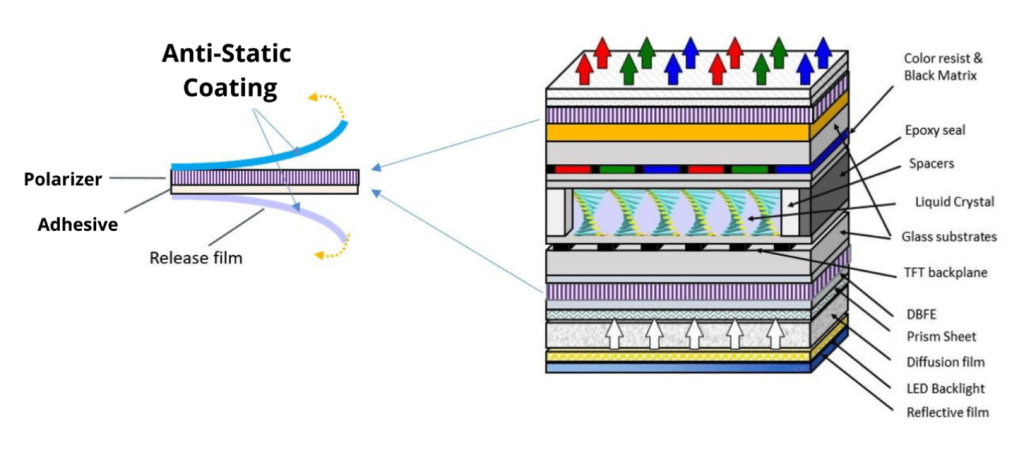
  • Protective covers for displays/instructments
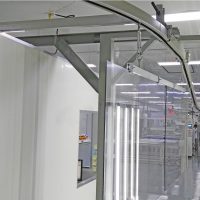
  • Conveyor Line Covers
  • Process Equipment Enclosures; And
  • Mini-Environment Glazing Panel

Test Method for ESD panels

Test Method for ESD Panels

At Excelite, we employ stringent testing procedures to ensure our ESD Panels meet the highest industry standards. Here’s a glimpse into our robust testing process:

Surface Resistivity Test: We begin by testing the surface resistivity of our ESD panels, a critical factor in determining their anti-static properties. This test provides us with the electrical resistance measurement across the surface of the panel.

Electrostatic Discharge Test: We then subject our ESD panels to simulated electrostatic discharge events. This rigorous testing ensures the panels can effectively dissipate static charges without causing damage to the material or compromising its integrity.

Impact and Abrasion Resistance Test: To ensure our ESD panels can withstand real-world use, we perform impact and abrasion resistance tests. These tests mimic the physical stress the panels may encounter during their lifespan.

Chemical Resistance Test: Our panels are also tested for their resistance to various chemicals. This ensures they can maintain their anti-static properties even in environments where they might come into contact with different solvents or substances.

Light Transmission Test: Finally, we verify the clarity of our panels by performing a light transmission test. This test measures the percentage of light that can pass through the material, ensuring it meets our high standards for visibility.

Choosing The Right Panels

Choosing the right material for your electronic device’s enclosure is crucial, and anti-static polycarbonate is an excellent option. It’s not only durable and impact-resistant but also provides superb protection against static electricity.

Here are some of the key features of anti-static polycarbonate:

Static Dissipative: With a surface resistance of 10^6 to 10^9 ohms, anti-static polycarbonate effectively dissipates static charge. This makes it an ideal material for electrical enclosures and devices susceptible to static damage.

Impact Resistant: Polycarbonate is a robust material, and its anti-static variant is no exception. It can withstand high-impact forces, making it perfect for devices that may experience bumps or drops.

Clear or Opaque: Available in both clear and opaque forms, anti-static polycarbonate allows you to select the level of visibility needed for your specific application.

Easy to Machine: Unlike some other plastics, polycarbonate is relatively simple to machine. This ease of machining enables the creation of custom enclosures and parts.

Dimensional Stability: Known for maintaining its shape over time, polycarbonate is ideal for applications requiring precise dimensions.

High-Temperature Resistance: Capable of withstanding temperatures up to 120 degrees Celsius, anti-static polycarbonate is excellent for electronic enclosures.

Good Chemical Resistance: Resistant to most chemicals, polycarbonate won’t easily degrade, making it suitable for enclosures that may come into contact with chemicals.

Flammability Rating: With a UL94 V0 flammability rating, polycarbonate is highly resistant to ignition, adding an extra layer of safety in applications where fire risk is a concern.

Application

ESD Polycarbonate sheet

ESD Polycarbonate Sheet

Our ESD Polycarbonate Sheet is a highly effective solution for controlling static electricity in various applications. It’s perfect for crafting bent and contoured equipment covers, guards, enclosures, and panels, offering enhanced safety in environments where static control is paramount. It can also do with thermoforming and heat bending.

Anti-static acrylic sheet

Anti-Static Acrylic Sheet

Excelite’s Anti-static acrylic sheet features a permanent static dissipative coating, providing robust anti-static properties. This sheet is not only harder on the surface, but it also combines the clarity and aesthetic qualities of acrylic with added safety features, making it an excellent choice for a wide range of applications.

Static Dissipative PVC

Static Dissipative PVC

Our ESD PVC Sheet boasts a permanent anti-static coating, enhancing the overall resilience of the material. Its abrasion and chemical resistance make it a reliable choice in demanding environments, combining durability and static control for versatile use.

FAQ

Most frequent questions and answers
An ESD polycarbonate sheet is a polycarbonate film or sheet treated or coated to provide controlled surface resistivity to prevent electrostatic charge buildup and protect sensitive electronic components.
Anti‑static is commonly defined as ≈10^9 – 10^12 Ω; materials below ~10^9 Ω are typically called dissipative or conductive.
some anti‑static coatings are long‑lasting but not permanent and can wear off
Yes; polycarbonate films and sheets can be CNC cut, routed with appropriate tooling and settings, but coated surfaces may require care to avoid damage—provide coating side and hold‑down details.
It can. Thin coatings typically keep haze <1–2% for clear grades, but thicker or textured anti‑glare/anti‑fingerprint treatments will increase haze and reduce transmission.
Both options are available; one‑side is standard for many optical applications, two‑side is offered when both faces need ESD or abrasion resistance.
TAILORED POLYCARBONATE SOLUTION


Get a Quote Today

Looking to transform your vision into a tangible product? 

At Excelite Plastics, every project is unique.

sales@exceliteplas.com

+86 135 8555 4902 (China)

+61452 396 680 (Australia)

Block 1 RuiSu Building, 2 Kecheng Rd, Suzhou, China 215122

Australia Branch: 6 Stephen Road, Dandenong South 3175

Click or drag a file to this area to upload.