Excelite

25mm Polycarbonate Thermoforming

Manufacturing in China,  Competitive price, Wide range of material 

25mm (1 Inch) Polycarbonate Thermoforming

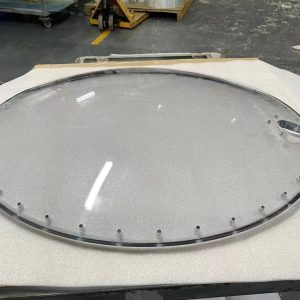
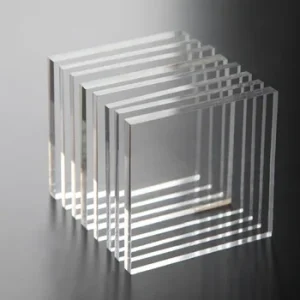
At Excelite Plastics we specialize in thermoforming thick-gauge polycarbonate. Forming 25mm (1″) polycarbonate shifts the process from simple sheet heating to precise, full–cross-section thermal control.

Our experienced engineers and production teams apply industry-proven selection, drying and heating protocols plus advanced mold design and handling to eliminate common defects and minimize scrap.

Whether you need transparent machine guards, tough structural components or large, optically-clear assemblies, Excelite delivers repeatable quality, on-time production and tailored finishing — including abrasion-resistant and hard-coat options — to meet demanding performance and aesthetic requirements.

Our capabilities

What difference to the thick polycarbonate thermoform?

1. Heating & Soak

– Surface may appear ready while the core is still too cool.

– Much longer soak/preheat times are required to achieve uniform through-thickness temperature.

2. Sag & Forming Control

– Slow heat penetration means the core remains stiff, causing non‑uniform forming.

– Tighter sag control and slower, more controlled draws are needed.

3. Cycle Time & Economics

– Cycle times increase sharply with thickness, reducing throughput.

– Higher per-part processing cost and different cost tradeoffs vs. thin-gauge work.

4. Equipment & Tooling

– Requires controlled, high-capacity ovens and consistent heat profiles.

– Needs robust, stiff molds and repeatable clamping/handling systems rather than relying on operator feel.

5. Quality Risks

– Greater sensitivity to optical distortion, dimensional drift, local thinning, bubbles, and stress whitening.

– Higher scrap/rework risk if process is not tightly controlled.

6. Coating Effects

– Coated grades narrow the process window and demand more precise temperature control.

7. Key Success Criteria

Stable dimensions, optical quality, and no bubbles or stress whitening.

Pre-Drying and Moisture Control (Critical for Thick Polycarbonate)

Polycarbonate is hygroscopic, which means it absorbs moisture from the air over time, reaching about 0.2% water content by weight at equilibrium. In thick sheet, that moisture becomes a major defect source because trapped water can vaporize during heating and create bubbles, splay, haze, and loss of optical clarity.

This is why pre-drying is often the line between acceptable output and rejected parts. Even as little as 0.05% moisture can cause bubbles when the sheet is heated for processing.

Storage conditions matter before the sheet ever reaches the oven. A dried sheet can reabsorb up to 0.5% water within 3 to 4 hours on a hot, humid day, and the effect is amplified in 1 inch thickness polycarbonate because the drying cycle must remove moisture throughout a larger mass.

Protective film integrity also matters because torn film can allow contamination and uneven exposure. A clean, dry sheet with controlled handling produces more predictable forming than a sheet that has absorbed ambient moisture for days on the shop floor.

Cooling, Demolding, and Stress Management

Cooling rate controls residual stress, final shape, and warpage. Forced cooling that is too aggressive can lock stress into the part, which may not appear immediately but can later cause distortion or stress cracking in service.

Demold only after the part has enough stiffness to hold shape without distortion. For critical parts, annealing can improve dimensional stability and reduce long-term stress sensitivity, especially after severe forming.

Applications of 25 mm Polycarbonate Forming

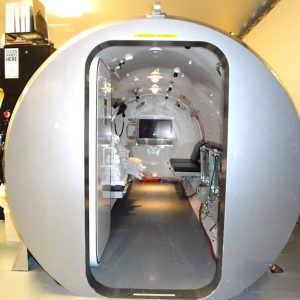
hyperbaric-chamber-door

Hyperbaric Chamber Doors and Viewing Panels

Safety-critical clarity and defect control (no bubbles, haze, or stress whitening), plus stable thickness distribution in the viewing area.
Riot Shields

Machine Guarding and Impact Shields

Formed transparent barriers for industrial equipment where required impact resistance and durability.

semiconductor polycarbonate

Protective Windows and Enclosures

Formed windows for outdoor or harsh environments where UV, cleaning chemicals, and abrasion drive grade and coating selection.
boat window

Transportation and Marine Glazing

Thick formed windows and windshields where curvature, edge finishing, and mounting-hole quality influence long-term cracking risk.

Hard Coated Acrylic Sheet

Specialty Covers and Domes

Thicker sections used to maintain stiffness in larger spans, especially when the part must be trimmed and machined precisely after forming.
medical device plastics

Medical and Lab Equipment Housings

Clear formed panels where cleaning protocols, disinfectants, and optical appearance tighten acceptance criteria.

Considerations when designing vacuum thermoformed parts

Heating Thick Polycarbonate: Temperatures, Soak Time, and Uniformit.

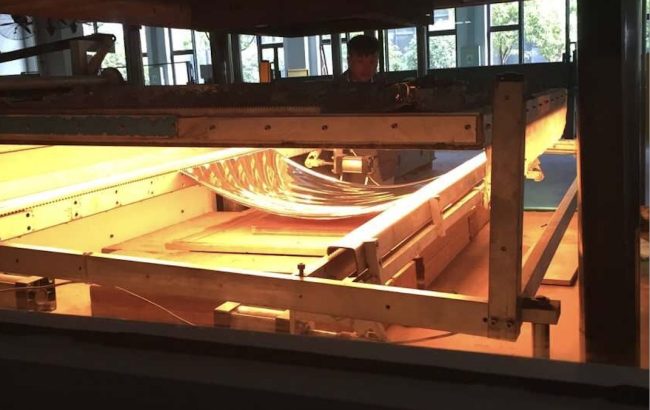
Thermoforming works within a processing window where the sheet becomes pliable but does not degrade or melt into uncontrolled flow. For thick polycarbonate, reaching that window requires enough time for the core to approach forming temperature, not only enough energy to warm the surface.

A surface reading alone can be misleading at 25 mm because the center of the sheet lags far behind the skin. That thermal lag explains why operators see acceptable gloss and sag on the outside while the part still resists draw in corners or springs back after forming.

Heating method therefore matters. For thick polycarbonate thermoforming, convection heating provides more uniform through-thickness heating, while infrared heating has limited penetration and is primarily surface and line-of-sight.

Practical indicators include controlled sag, even gloss, and similar pliability across the full sheet area. If one zone softens early or develops localized orange peel, the process is already drifting away from repeatability.

Vacuum Forming process

FAQ

For thermoforming, the “best” thickness is the one that still forms consistently while meeting minimum wall thickness after forming. 25 mm is typically chosen when the part needs high impact resistance, optical credibility, and enough stock to machine features after forming (holes, sealing grooves, edge profiles) without cutting into thin areas.
The main disadvantages at 25 mm are process-driven: long heat soak time, higher sensitivity to moisture (bubbles and haze), and higher residual stress risk (warping, springback, later cracking) if cooling is rushed. Thick sheet also increases the chance of optical distortion and visible surface defects, so handling, tooling finish, and temperature uniformity matter more than they do in thin-gauge forming. Thick polycarbonate forming rewards control more than speed. If the sheet is properly selected, dried, heated through the core, formed with suitable tooling, and cooled without locking in stress, 25 mm polycarbonate can deliver high-impact, optically credible parts with reliable dimensional performance.

Why Excelite?

With over 15 years of polycarbonate fabrication and machining experience, Excelite specializes in the fabrication of polycarbonate and acrylic sheet products, ensuring top-notch quality and precision. We are committed to providing the best manufacturing solutions tailored to your unique requirements. 

Whether you have a detailed drawing or just an idea, our team of professionals is ready to turn your vision into reality. Enjoy the benefits of our services, including:

  • In-house Design & Tooling
  • Exceptional Accuracy (+/- 0.005″ Tolerances)
  • Comprehensive OEM & ODM Services
  • ISO 9001:2008 Certification
  • Direct Manufacturer Advantage

We invite you to partner with us and experience a seamless, efficient, and quality-driven production process.


TAILORED POLYCARBONATE SOLUTION

Get a Quote Today

Looking to transform your vision into a tangible product? 

At Excelite Plastics, every project is unique.

sales@exceliteplas.com

+86 135 8555 4902 (China)

+61452 396 680 (Australia)

Block 1 RuiSu Building, 2 Kecheng Rd, Suzhou, China 215122

Australia Branch: 6 Stephen Road, Dandenong South 3175

Click or drag a file to this area to upload.